Water Tightness Testing
A structured method for confirming whether a terrace or balcony membrane is performing its waterproofing function — or has failed. The test that precedes every project.
Understanding the water tightness test
A water tightness test — also called a ponding test or flood test — is a controlled procedure for determining whether a waterproofing membrane is intact and functioning. It is the diagnostic tool used to confirm the source of water infiltration before any repair work begins.
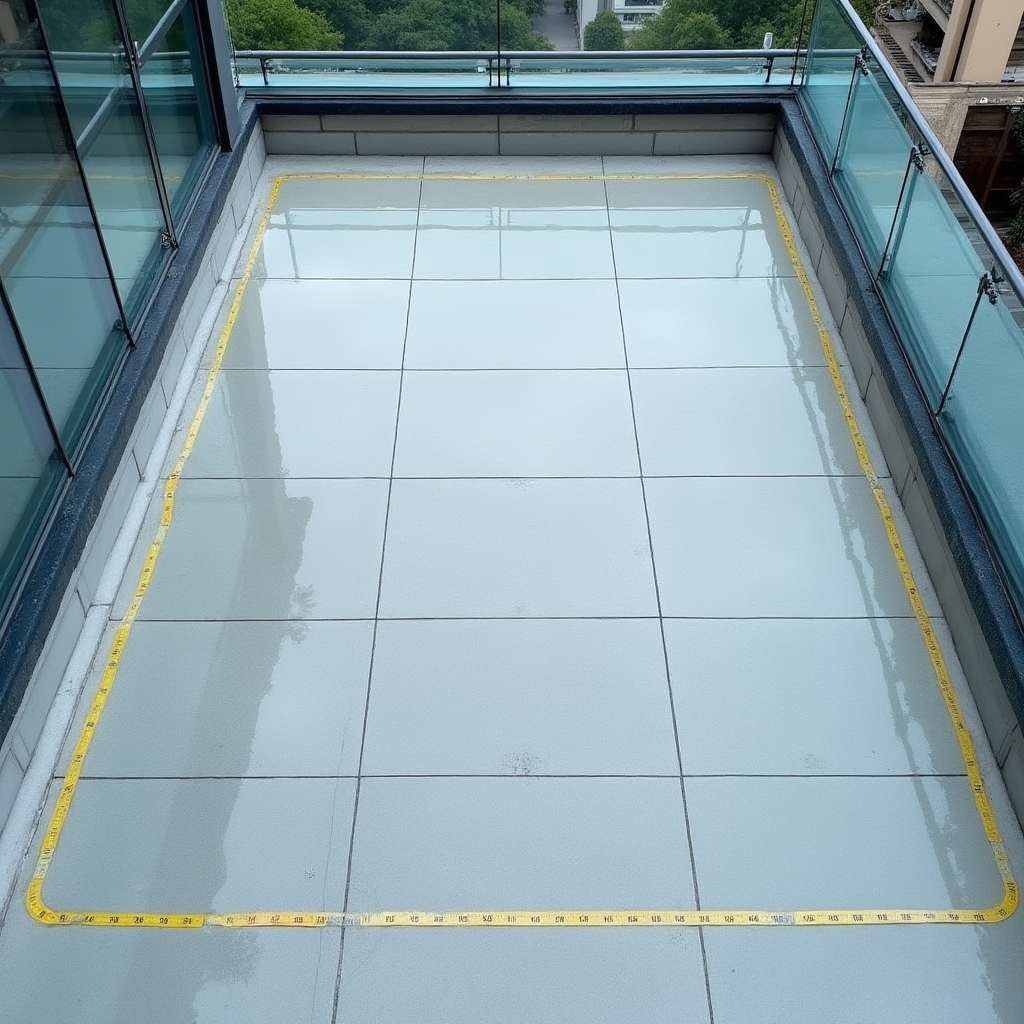
The test involves temporarily retaining a controlled volume of water on the terrace surface for a defined period, while monitoring the unit below for any signs of water penetration. The results are documented — either confirming that the membrane is intact, or identifying that infiltration is occurring and establishing the approximate location.
This test is not invasive and does not damage the existing membrane. It is a diagnostic procedure, not a repair.
How the test is conducted
Surface Preparation
Drainage outlets on the terrace are temporarily plugged to allow water to accumulate on the surface. The surrounding area is assessed to ensure the test can be conducted safely.
Water Application
A controlled volume of water is applied to the terrace surface, creating a uniform layer. The water level is measured and recorded at the start of the test period.
Monitoring Period
The water is left in place for a defined period — typically 24 to 48 hours. During this time, the unit below is monitored for any signs of water penetration at the ceiling or walls.
Result Documentation
At the end of the monitoring period, the results are documented. If infiltration is detected, its location is recorded. The written report describes the findings and provides the basis for next steps.
Situations where a water tightness test is appropriate
Active infiltration suspected
When water stains, damp patches, or active dripping appear on a ceiling or wall and the source has not been identified, a test on the terrace above is a standard diagnostic step.
Visible membrane deterioration
When a terrace membrane shows visible signs of aging — cracking, blistering, separation at edges or penetrations — a test confirms whether the deterioration has progressed to the point of functional failure.
Dispute resolution
When there is a dispute between owners about the source of water damage, a water tightness test provides objective, documented evidence of the membrane's condition at a specific point in time.
Pre-sale or pre-purchase assessment
Before selling or purchasing a unit with a terrace, a water tightness test establishes the current condition of the membrane and avoids post-transaction disputes related to water damage.
Post-repair verification
After waterproofing work has been completed, a test confirms that the new system is performing correctly before the guarantee is issued. This is the final step in our process.
Preventive assessment
Building communities may commission periodic tests as part of a preventive maintenance program, to identify membranes that are approaching failure before infiltration damage occurs.
Interpreting the results
If no infiltration is detected
The membrane is functioning as intended. The written report documents this finding, which can be used as evidence of the membrane's condition on the date of the test. If infiltration is occurring from another source, the test result helps narrow the investigation.
A clean result is useful documentation
Confirming that a membrane is functional — even in the absence of active infiltration — provides a dated record of its condition that can be referenced in future disputes or transactions.
If infiltration is detected
The report identifies the location and extent of the membrane failure. This becomes the basis for a waterproofing scope of work: membrane removal, substrate assessment, new system application, and a follow-up verification test once the new system has cured.
The test is not the repair
Identifying a membrane failure through a water tightness test does not repair it. The test establishes the condition and provides the information needed to plan and execute the appropriate intervention.
Request a water tightness test
Whether you need to confirm the source of infiltration or establish the condition of a membrane before a transaction or repair, contact us to arrange a diagnostic assessment.