How We Work
A structured, documented methodology applied consistently on every project — from single-unit assessments to full building programs.
The cost of skipping steps
Waterproofing failures in buildings are rarely the result of low-quality materials alone. More often, the cause is procedural: a membrane applied over a damp substrate, a test skipped because the schedule was tight, or a guarantee that existed only verbally and was never honored.
Our process is designed to eliminate each of these failure points. Every step is documented, and the next step does not begin until the previous one has been verified. This creates a traceable record that protects both the owner and the building administration.
Documentation as protection
In the event of a future dispute — whether between unit owners, with the building administration, or with an original developer — documented verification of the work performed is an essential piece of evidence.
Step by step
Initial Contact & Scoping
We begin with a conversation about the building, the number of units affected or at risk, the current symptoms observed, and the history of previous repairs if any. This allows us to prepare a relevant site visit rather than a generic one.
On-Site Diagnostic Assessment
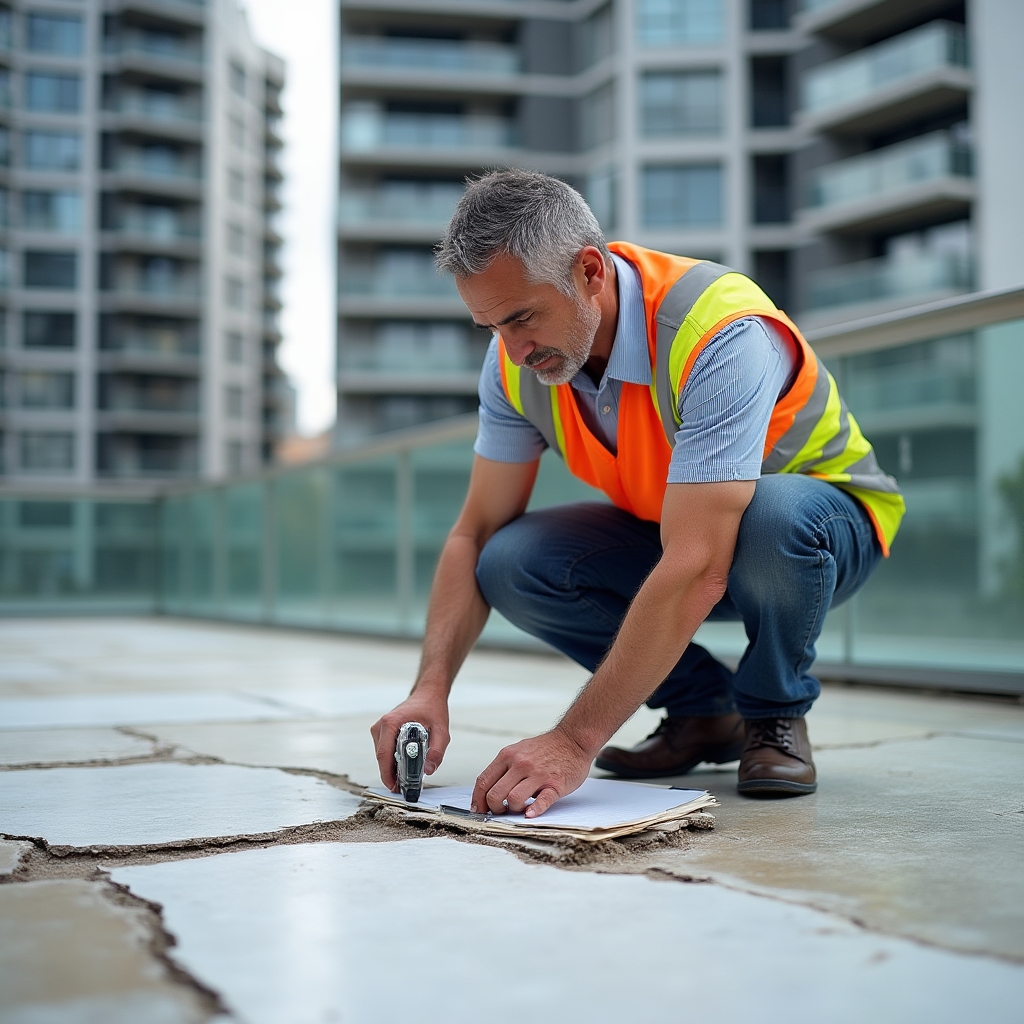
A technical specialist visits the site to inspect the terrace or balcony surface visually and perform a water tightness test. The test involves controlled water application and monitoring for infiltration over a defined period. Results are recorded.
Written Diagnostic Report
Following the site visit, we provide a written assessment that describes the condition of the existing membrane, the results of the water tightness test, and a recommendation for the appropriate waterproofing system. This document belongs to the owner and can be used independently.
Membrane Removal
When work proceeds, the existing membrane is fully removed — not covered over. Covering a failed membrane traps moisture and creates conditions for accelerated deterioration of the new system. We remove to bare substrate and assess what is beneath.
Substrate Preparation
The substrate is cleaned, dried, and repaired as needed. Cracks are sealed, drainage points are checked, and slope is verified. A membrane applied to a compromised substrate will not perform correctly regardless of its quality.
New Waterproofing System Application
The new membrane system is applied according to the specifications appropriate for the surface: its area, material, slope, drainage configuration, expected foot traffic, and exposure to UV and weather. We do not use a single product for every situation.
Final Verification & Video Documentation
Once the new system has cured, we perform a final water tightness test. This test is recorded on video. The video is provided to the owner and forms part of the project file.
Written Guarantee Issuance
A written guarantee is issued specifying the coverage period, what is covered, and the conditions under which the guarantee applies. This is a formal document, not a verbal commitment.
Individual units and full buildings
Single Unit
An owner with a single terrace or balcony can commission a standalone assessment and waterproofing project. The same methodology applies: diagnosis, removal, application, verification, guarantee.
Multiple Units
When several owners in the same building need waterproofing, we coordinate scheduling to minimize disruption and maintain material consistency across all units addressed in the program.
Full Building Program
Building communities can commission a systematic assessment of all terraces and balconies, followed by a phased waterproofing program managed through a single point of contact with the building administration.
Start with a diagnostic assessment
The first step is always understanding the actual condition of the membrane — not assuming. Contact us to arrange a site visit.